
Menu
Solar Charge Time Calculator
Estimate recharge time from battery watt-hours, panel watts, station input limit, sun hours, and realistic solar derating.
Loading solar calculatorPreparing calculator
This tool didn't load
Something blocked the calculator from starting. Check your connection or reload the page to try again.
Optional station preset
Full refill at current solar input
3h 13mFull refill at current solar input: 3h 13mBased on 300 W effective solar input. Refill needs 3h 13m of usable sun, about 0.7d at 4.5 peak sun hours/day.
Refill target963 Wh
Daily solar1,350 Wh
Runtime offset16h 53m
Load coverageoffsets load
Conservative4h 1m
Estimated3h 13m
Optimistic2h 44m
Sensitivity scenarios, not a measured confidence interval: the endpoints change planning assumptions or apply the stated planning factors. They are not a guarantee or a probability of achieving this runtime.
Solar output changes with shade, heat, clouds, panel angle, wiring, charge-controller behavior, and whether the station is already near full. Treat this as a planning estimate.
What To Check Next
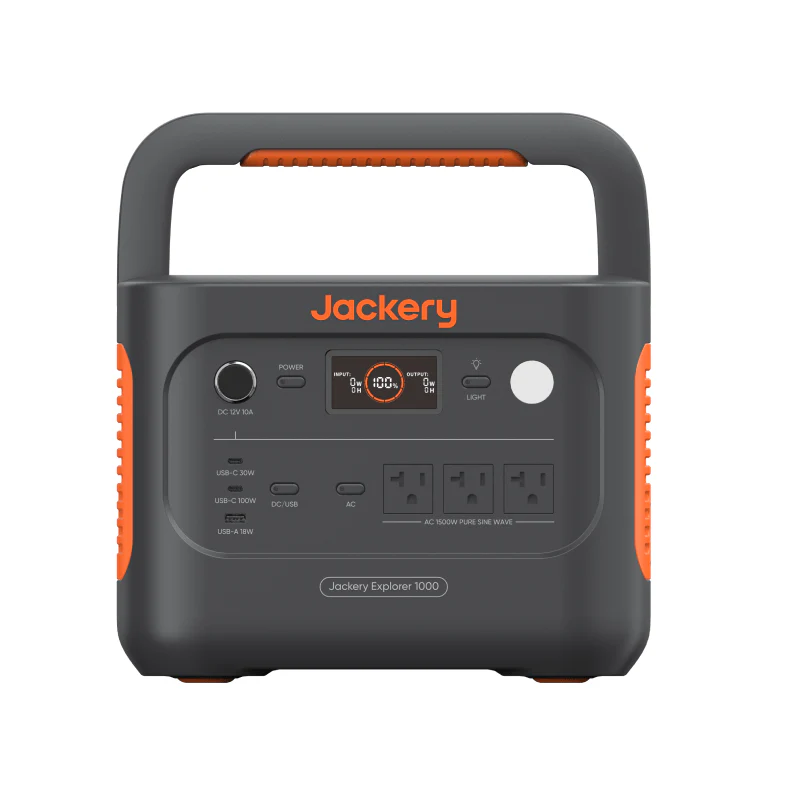
Selected Station
Jackery Explorer 1000 v2 has a tracked solar input of 400 W.
Use With Runtime
Add the daily solar Wh to your load plan only when panels are deployed during usable sun hours.
Measurement Tip
Compare the station display's solar input against this estimate and adjust the derate until it matches your real setup.
WattRunTime.com
WattRunTime solar charge estimate
Effective solar input300 W
Daily solar1,350 Wh
Runtime offset16h 53m
Reserve kept unused10%
WattRunTime solar charge estimate
- WattRunTime solar charge estimate
- Station: Jackery Explorer 1000 v2
- Recharge estimate: 3h 13m
- Runtime range
- Conservative: 4h 1m
- Estimated: 3h 13m
- Optimistic: 2h 44m
- Effective solar input: 300 W
- Daily solar: 1,350 Wh
- Runtime offset: 16h 53m
- Reserve kept unused: 10%
- Sensitivity scenarios, not a measured confidence interval: the endpoints change planning assumptions or apply the stated planning factors. They are not a guarantee or a probability of achieving this runtime.
- Solar output changes with shade, heat, clouds, panel angle, wiring, charge-controller behavior, and whether the station is already near full. Treat this as a planning estimate.
Sensitivity scenarios, not a measured confidence interval: the endpoints change planning assumptions or apply the stated planning factors. They are not a guarantee or a probability of achieving this runtime.
Solar output changes with shade, heat, clouds, panel angle, wiring, charge-controller behavior, and whether the station is already near full. Treat this as a planning estimate.
Panel ↔ station: check the exact input
Pilot: five stations and two specific panel manuals. One input port is screened; separate ports are not added together. These checks are not connection instructions or compatibility approval. Unknown fields remain unresolved. The manuals publish a generic voltage temperature coefficient; its applicability to Voc has not been established, so no cold-voltage preset is inferred.
Swipe table sideways
| Model | Published input, per port | Charging temperature |
|---|---|---|
| EcoFlow DELTA 2 EcoFlow · 2026-09-30 | 11–60 V · 15 A · 500 W | 0–45 °C |
| EcoFlow DELTA 2 Max EcoFlow · 2026-09-30 | 11–60 V · 15 A · 500 W | 0–45 °C |
| EcoFlow RIVER 2 EcoFlow · 2026-09-30 | 11–30 V · 8 A · 110 W | 0–45 °C |
| EcoFlow RIVER 2 Max EcoFlow · 2026-09-30 | 11–50 V · 13 A · 220 W | 0–45 °C |
| EcoFlow RIVER 2 Pro EcoFlow · 2026-09-30 | 11–50 V · 13 A · 220 W | 0–45 °C |
Panel ↔ station: check the exact input
Cannot confirm: evidence missing
Voc 21.8 V · Vmp 18.4 V · Imp 6 A · Isc 6.5 A · 110 W
- Nominal voltage / Vmp: Within this numeric limit
- Cold Voc: Cannot confirm: evidence missing
- Operating current Imp: Within this numeric limit
- Short-circuit current Isc: Cannot confirm: evidence missing
- Power incl. published tolerance: Within this numeric limit
- Panel temperature: Within this numeric limit
- Charging temperature: Within this numeric limit
- Connector / polarity: Cannot confirm: evidence missing
- Array topology: Cannot confirm: evidence missing
Verify your watts
- Check the device label for running watts or input amps and volts.
- Use a plug-in watt meter for AC loads when the result matters.
- For cycling loads, measure long enough to capture on/off behavior.
Check output path
- AC inverter loads usually lose more energy than direct DC loads.
- Keep reserve for cold weather, battery age, and load changes.
- Do not treat label capacity as fully usable watt-hours.
Related Calculators
Use the related tools when charging, sizing, surge, or power path changes the answer.